Epigenetics: Rewriting the Ancestral Blueprint: How It Works
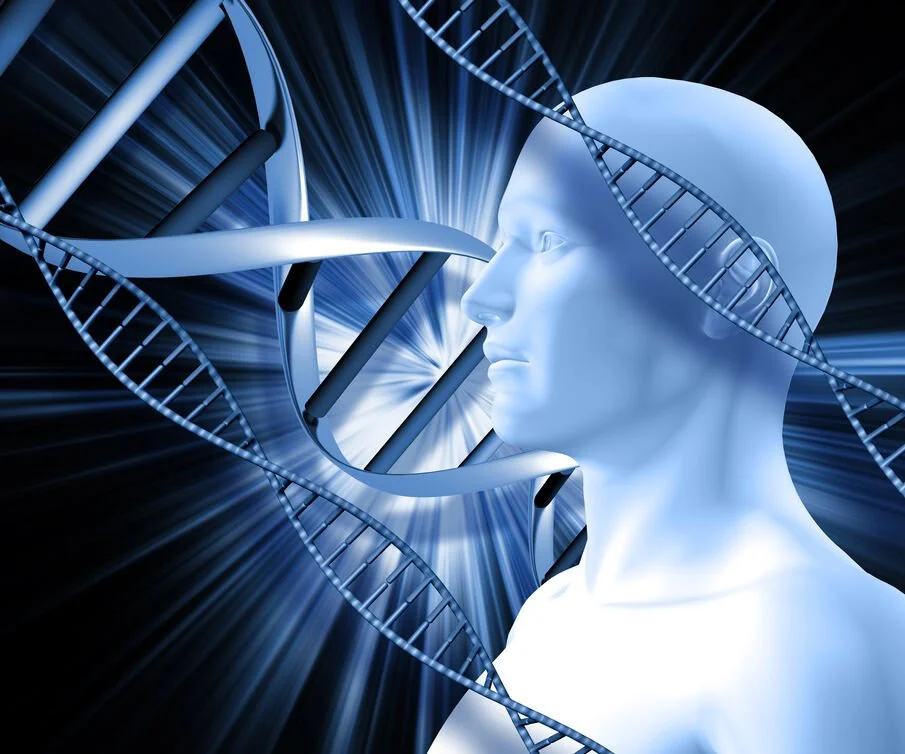
There's a profound - and often heavy - realization that comes when we start to look at our own recurring patterns.
Those inexplicable cycles of anxiety that seem to come from nowhere.
The sudden spikes of stress that feel disproportionate to what's actually happening.
The deep-seated beliefs about scarcity or unworthiness that you can't trace back to any specific moment in your own life.
We often treat these traits as personal failures. As evidence that we're "too sensitive" or "just wired this way."
But the emerging science of epigenetics is revealing something far more profound:
You are not just the product of your own experiences.
You are a living, breathing library of your ancestors' survival strategies.
You carry within you a biological blueprint that was drafted long before you were born - etched into the very chemistry of your DNA by the triumphs and traumas of the women who came before you.
And here's the part that will change everything: you have the power to rewrite it.
Beyond the Genetic Code: Meet Your Epigenome
To understand this, we have to look past the genetic code itself and focus on what sits "on top" of it.
Your DNA sequence is the permanent hardware of your biology - the genetic instructions you inherited from your parents that won't change throughout your lifetime. But epigenetics acts as the software. It's the system that determines which parts of that genetic code get read and which parts stay silent.
The primary mechanism at work here involves tiny chemical tags called methyl groups (CH₃) that attach to your DNA like molecular Post-it notes.
These methyl groups act like light switches, turning genes "on" or "off" without altering the underlying genetic sequence itself.
This process is called DNA methylation, and it's one of the most powerful biological tools your body has for adapting to your environment.
When a gene is heavily methylated, it's essentially silenced - the cellular machinery can't access it to create proteins. When methylation is removed, that gene becomes active again, ready to be expressed.
And here's what's extraordinary: these methylation patterns can be passed down through generations.
This means that while you may have inherited a "stress-prone" or "hyper-vigilant" blueprint from your grandmother or great-grandmother, that blueprint is not a life sentence.
It's merely a set of instructions that are waiting to be read - or rewritten.
The Science of Inherited Trauma
Research into what scientists call "intergenerational epigenetic inheritance" shows that when our grandmothers or mothers experienced prolonged periods of high stress, scarcity, famine, or fear, their biology adapted to ensure their offspring would be "prepared" for a similar world.
One of the most famous studies demonstrating this comes from the Dutch Hunger Winter of 1944-1945. Pregnant women who were starving during this famine gave birth to children who, decades later, showed altered methylation patterns in genes related to metabolism and stress response.
These children - and even their grandchildren - had higher rates of obesity, diabetes, and cardiovascular disease, despite never experiencing famine themselves.
Their bodies were biologically "prepared" for scarcity, even in a world of abundance.
Similarly, studies on Holocaust survivors found that trauma experienced by parents created distinct epigenetic changes in their children, particularly in genes that regulate the stress hormone cortisol.
The children of survivors showed lower baseline cortisol levels and altered stress responses - their bodies had been pre-programmed for a threatening world.
This is transgenerational epigenetic inheritance - and you are likely carrying some version of it in your own cells.
Your grandmother's chronic stress during the Great Depression. Your mother's experience of emotional scarcity or instability. The collective trauma carried by generations of women who had to be hyper-vigilant just to survive.
These experiences didn't just affect them. They altered the methylation patterns in their eggs - the very eggs that would eventually become you - programming your stress response, your metabolism, your baseline state of nervous system activation.
You are effectively running ancient survival software on modern hardware.
But Here's the Revolutionary Part
The beauty of this science - the part that makes all of this empowering rather than deterministic - is the discovery that these chemical switches are incredibly sensitive to the environment we curate today.
You are not a passive victim of your lineage.
You are the active editor of your genetic expression.
Unlike genetic mutations, which are permanent, epigenetic modifications are reversible.
The methylation patterns that were laid down in your grandmother's lifetime can be altered in yours.
Every single choice you make sends a biochemical signal to your cells, telling them which part of the ancestral blueprint to prioritize.
When you intentionally shift your environment, your nutrition, your stress levels, and your daily practices, you aren't just "feeling better" - you are physically signaling your genes to turn off the survival-mode markers of the past and turn on the markers of vitality, resilience, and peace.
This is the ultimate form of ancestral healing.
You are literally clearing the "ghosts" out of your genetic code so that the generations following you don't have to carry the same weight.
The Four Primary Signals Your Genes Respond To
To step into your role as the Architect of your own biology and begin rewriting these deep-seated epigenetic blueprints, it helps to understand the primary environmental signals that influence gene expression:
1. The Signal of Environment
Your genes are constantly "sampling" your surroundings through a process called environmental sensing. When you're chronically exposed to high-stress environments, toxic relationships, or chaotic living conditions, your cells detect this as a threat.
This activates the hypothalamic-pituitary-adrenal (HPA) axis - your body's central stress response system - which floods your bloodstream with cortisol and adrenaline.
Over time, chronic HPA axis activation leads to increased methylation of genes involved in calm, restorative processes, while demethylating (activating) genes involved in inflammation, vigilance, and survival.
By curating a home and work life that signals safety - through beauty, order, nature, and nurturing relationships - you provide the biological permission your cells need to move out of defense mode and into growth mode.
You're literally changing the biochemical messages your environment is sending to your DNA.
2. The Signal of Targeted Nutrition
Food is not just calories or macronutrients. Food is information. It provides the raw materials your cells use to manage epigenetic modifications.
The process of DNA methylation requires something called a methyl donor - and where do those come from? Your diet.
Nutrients involved in what's called the methylation cycle include:
Folate (vitamin B9) - found in leafy greens, legumes, and liver.
Vitamin B12 - found in animal products, particularly shellfish and organ meats.
Choline - found in eggs, especially the yolks.
Betaine - found in beets, spinach, and quinoa.
Vitamin B6 - found in poultry, fish, and starchy vegetables.
These nutrients literally provide the CH₃ methyl groups that your body attaches to DNA to regulate gene expression.
When you're deficient in these nutrients, your body cannot efficiently perform the methylation necessary to silence stress genes or activate genes for cellular repair and longevity.
Eating with intention - especially foods rich in these methylation co-factors - is one of the fastest ways to tell your DNA that the "time of scarcity" is over.
3. The Signal of Mindfulness and Nervous System Regulation
Your thoughts and emotional states create a chemical bath for your cells.
When you're in a chronic state of anxiety or rumination, your body is producing stress hormones - primarily cortisol and norepinephrine - that directly influence which genes are turned on or off.
Studies using techniques like mindfulness-based stress reduction (MBSR) and somatic experiencing have shown measurable changes in gene expression after just 8 weeks of practice.
Specifically, genes involved in inflammation and stress response become down-regulated (less active), while genes involved in immune function and cellular health become up-regulated (more active).
One landmark study found that even a single day of intensive mindfulness practice altered the expression of histone deacetylase genes (HDACs) - enzymes that help regulate the epigenome - leading to faster recovery from stress and reduced inflammatory gene expression.
When you practice breathwork, meditation, or somatic release, you are regulating your nervous system and lowering cortisol.
This change in your internal biochemistry signals to your DNA that the ancestral threat is no longer present, allowing the "stress-prone" genes to go dormant.
4. The Signal of Movement
Physical activity - especially when done with joy rather than as punishment - creates powerful epigenetic changes, particularly in your muscle and fat tissues.
Exercise influences an enzyme called AMP-activated protein kinase (AMPK), which acts as a cellular energy sensor. When activated through movement, AMPK triggers changes in DNA methylation and histone modification that improve metabolic function, enhance mitochondrial biogenesis (the creation of new energy-producing mitochondria), and reduce inflammation.
Studies have shown that regular physical activity can reverse methylation patterns associated with metabolic syndrome and obesity- including those inherited from ancestors who experienced famine or chronic stress.
Movement acts as a biological reset button, telling your genes, "We are safe. We are strong. We have the energy to thrive, not just survive."
You Are the One Who Breaks the Cycle
The "New You" is not a version of yourself that you have to invent from scratch. She is already there, buried beneath the layers of inherited survival strategies that were never yours to carry.
By understanding epigenetics, you realize that your power lies entirely in the present moment. You have the ability to reach back into your lineage and tell your DNA: "The struggle is over. I am the one who decides what happens next."
You are the master of the blueprint.
You are the one who decides which genes get to speak and which stay silent.
You are the one who gets to say, "This pattern ends with me."
This is the science of a truly Divine life: the realization that while you may have inherited the house, you are the one who chooses how to live in it.
And in choosing differently - in curating your environment, nourishing your body with intention, regulating your nervous system, and moving with joy - you're not just healing yourself.
You're healing your lineage.
You're rewriting the story for every daughter who comes after you.
That is the most sacred work there is.